Variety Provides the Spice at Penn State's Ag Progress Days - Gant Daily

UNIVERSITY PARK – If you’ve made the arguably easy decision to attend Penn State’s Ag Progress Days, Aug. 16-18, now comes the hard part: deciding what to see and do when you get there.
The annual agricultural exposition — one of the largest in the East — provides visitors with about 150 acres of commercial and educational exhibits, crop displays, machinery demonstrations, family and youth activities, horse exhibitions, workshops and an agricultural museum. Guided research tours take visitors into the field in the surrounding, 2,400-acre Russell E. Larson Agricultural Research Center.
The expo typically attracts as many as 45,000 visitors from across Pennsylvania and beyond — an estimated 60 percent of whom are directly or indirectly involved in agricultural production — to get a glimpse into the science and business of agriculture. But, organizers say, you don’t have to be a farmer to enjoy and learn from Ag Progress Days.
“We strive to make the event an enjoyable learning experience for everyone who comes, regardless of their interests and backgrounds,” said Bob Oberheim, Ag Progress Days manager, who will retire this fall after 25 years of overseeing the show.
“Although the majority of attendees have some connection to production agriculture, we offer activities for virtually everyone, including gardeners, food enthusiasts, conservationists, woodlot owners, educators, children and anyone interested in the agricultural and natural resource sciences.”
College of Agricultural Sciences Exhibits Building
This building will provide a focal point for a few key issues affecting Pennsylvania and how the college’s research and extension programs are addressing them.
The building, which also contains a theatre area for presentations, will showcase the college’s programs related to agriculture, water quality and the Chesapeake Bay; small and “backyard” poultry flock health and management, including precautions against avian flu; the potential of biomass crops for renewable energy; and educational initiatives for private forest landowners.
The Trade Show
Ag Progress Days offers farm operators “one-stop shopping” to compare goods and services, see the latest machinery in action, and find out about new methods and technologies that can help them maximize productivity. Commercial exhibitors will display virtually every product category, including field machinery, milking systems, animal genetics, storage structures, seed, feed, tools, trailers, sprayers, mixers, livestock housing, utility vehicles, fertilizers, fencing, financial products, insurance and more.
Field demonstrations will give visitors a firsthand look at how the latest models from different manufacturers perform under real-world conditions. A new demonstration in 2016 will spotlight pull-type and self-propelled sprayers.
Youth Activities
The 4-H Youth Building will house several interactive exhibits and activities. The well-known “Bugman,” Ryan Bridge, will offer live displays that will enable kids to learn about insects. Children also can play with bunnies, work with fiber arts, discover the world of food science and view plant disease pathogens under a microscope. Displays also will highlight the importance of grains as part of a healthy diet and will feature information on what 4-H has to offer.
Several other activities aimed at children and their families can be found throughout the Ag Progress Days grounds. At the Kids’ Climb, children can don safety equipment and harnesses and climb a tree like a professional arborist; Shaver’s Creek Environmental Center will showcase turtles, snakes, birds of prey and amphibians; a corn maze offers a fun way to learn facts about Pennsylvania agriculture; and kids can race around a track at the Pedal Go Kart Derby.
The Equine Experience
Horse owners and enthusiasts can enjoy a full schedule of training and breed clinics, demonstrations, informational displays and lectures. Breed exhibitions will range from miniature horses to powerful draft horses.
Other featured events will include drill-team performances, heavy-armor jousting and carriage racing. In addition, the Pennsylvania State Police Mounted Patrol will demonstrate crowd control using horses, and visitors can hear presentations and get information on topics such as animal-assisted therapy, equipment and facilities, horse health and nutrition, and stable management.
Tours
Free, daily tours will allow visitors to see production and management practices being studied by Penn State researchers at the surrounding Russell E. Larson Agricultural Research Center. Tour attendees are transported by bus, but most tours require some walking or standing.
Topics will include precision agriculture, woodlot management, wildlife habitat, biofuel feedstocks, pasture management and grazing, breeding and restoration of the American chestnut tree, high-tunnel vegetable production, and more.
Farm Safety and Health
Penn State safety experts will use a remote-controlled tractor to demonstrate tractor rollover hazards and how to avoid them. Farm accident rescue simulations involving agricultural equipment, including demonstration of emergency scene stabilization and patient-extrication techniques, also will be held.
At the Rural Health and Safety Tent, visitors can take advantage of a variety of health screenings. Free vision tests, blood pressure readings and stroke assessments will be offered daily, and information will be available on personal protective equipment, dental hygiene and power take-off safety.
Crops, Soils and Conservation Area
In the J.D. Harrington Crops, Soils and Conservation Building, specialists from Penn State and other organizations will answer crop production, weed identification and biofuel questions. Visitors can ask questions about crop and nutrient management, no-till practices, organic farming and sustainable agriculture.
Penn State weed scientists and extension specialists also will provide information and advice about Palmer amaranth and waterhemp, two invasive weeds that are gaining a foothold in Pennsylvania and pose a serious threat to corn and soybean yields.
The 2016 Pennsylvania Hay Show, sponsored by the Pennsylvania Forage and Grassland Council will take place in the Harrington Building from 9 a.m. to 4 p.m. daily. Hay producers can bring samples to be evaluated.
The Family Room
At the Family Room building, families and children can play mini-games, watch food demonstrations, taste healthy food and drink, participate in a scavenger hunt, and learn first aid and firearm safety tips.
The Family Room will feature a variety of hands-on exhibits and demonstrations on topics such as diabetes and diet, home food preservation, the importance of drinking water for proper health and nutrition, and the safe use of pesticides at home.
During healthy lifestyles food demonstrations conducted by Penn State Extension educators, visitors can watch the preparation of quick and healthy dishes, taste the resulting fare and receive copies of the featured recipes.
Lawn and Garden Area
Penn State Extension Master Gardeners will be on hand to offer advice and information to manage home gardens, lawns and landscapes, and faculty and extension specialists from the College of Agricultural Sciences will field questions, identify insect and plant-disease samples brought by visitors, and conduct flower-arranging demonstrations.
Strolling through the pollinator garden will allow attendees to see native, flowering plants that attract — and help conserve — threatened pollinators. Experts from the Pennsylvania State Beekeeper’s Association and Penn State Extension will staff a demonstration beehive. Displays also will highlight garlic and herb gardening and potato varieties and production.
Pasto Agricultural Museum
The museum offers hands-on exhibits to connect visitors to their agricultural past. The approximately 1,300 items in the collection span from 4,000 B.C. to the 1940s — before the widespread use of electricity and gasoline-powered equipment — when farm and household work was accomplished with the muscle power of people and animals.
Wheat-threshing demonstrations on a Champion threshing machine outside the museum will bring the history of early small grains harvest to life, and representatives of the Centre County Historical Society and Centre Furnace Mansion will be on hand to share some of the early history of the region and the founding of Penn State. Also, “The Axe Whisperer,” Jim Walizer, will share his passion for the history of timber, logging and forestry in Pennsylvania.
The museum will hold a silent auction Aug. 16-17, with more than 200 items available for bid or cash-and-carry purchase.
Location, Dates and Times
Sponsored by Penn State’s College of Agricultural Sciences, Ag Progress Days is held at the Russell E. Larson Agricultural Research Center at Rock Springs, nine miles southwest of State College on Route 45. Hours are 9 a.m. to 5 p.m. Aug. 16; 9 a.m. to 8 p.m. on Aug. 17; and 9 a.m. to 4 p.m. on Aug. 18. Admission and parking are free.
For more information, visit the Ag Progress Days Web site. Twitter users can find and share information about the event by using the hashtag #agprogressdays, and Facebook users can find the event at http://www.facebook.com/AgProgressDays.

The making of Schlitterbahn's Verrückt water slide: Too much, too fast? - Kansas City Star

Schlitterbahn co-owner Jeff Henry struck on the idea some time around 2012: His Texas company would build a water slide zipping riders from a height nobody had gone to before.
The notion looked particularly attractive because the Travel Channel wanted footage of the testing and opening to kick off its next season of “Xtreme Waterparks.”
The Verrückt, then, became a chance to turbocharge the prospects of Schlitterbahn in Kansas City, Kan., after its ho-hum launch a few years before. Not only would this super slide elevate the heights riders could zoom down, it would bring buzz to the park.
By early 2013, Henry began sharing his inspiration to make Wyandotte County the site of the world’s tallest water slide — a process largely controlled by Schlitterbahn with little interference from any government regulators.
The Verrückt opened a year later in all its 168-foot, heart-stopping glory.
A well-oiled hype machine attracted media from around the globe to Kansas City, Kan., for the July 2014 opening. Political leaders jumped in on the promotion. Mayor Mark Holland was one of the first to try the 17-story drop and its subsequent stomach-collapsing 50-foot hump.
For the next two years, Verrückt drew such large crowds that Schlitterbahn suggested that visitors make reservations ahead of time. The sky-piercing slide capped decades of success for Henry’s company. The company had custom-made spectacular rides in the past. This time it would push the envelope further.
Now following the death of 10-year-old Caleb Thomas Schwab on Aug. 7, an examination by The Kansas City Star of how the Verrückt rose from the ground shows how little stood in the path of an idea that appears, in hindsight, to have been dotted with warning signs.
Was the design of the ride too aggressive? Did it bake in too many hard-to-control factors? Did late-stage changes aimed at safety — namely the addition of netting supported by metal hoops just above where guests would sail at speeds reaching 70 miles per hour — pose added danger? And whose decision was it?
Was Verrückt too much, too fast?
An official investigation figures to take weeks, if not months, to complete. Schlitterbahn and others involved in building the slide have declined interview requests in the accident’s aftermath. Yet signs show that a slide that took its name from the German word for insane encountered few obstacles.
  Ambitious plans
When the idea of a Schlitterbahn water park in Kansas City, Kan., first surfaced in 2005, it seemed like another big victory for western Wyandotte County’s ongoing renaissance.
Kansas Speedway, Village West and Community America Ballpark had preceded Schlitterbahn’s announcement. Each was a hard-won development that local officials pursued following the unification of Wyandotte County and Kansas City, Kan., governments in 1997. Each of these developments would have a hand in transforming the area’s image from a declining community overrun by political patronage to a boom spot on the edge of the metro.
Early on, Schlitterbahn officials described a $1.2 billion investment with hundreds of hotel rooms, 100 cabins, “tree-house” lodging and hundreds of thousands of square feet of new retail alongside a state-of-the-art water park.
Schlitterbahn’s origins in Texas began humbly enough. Bob and Billye Henry started launching tourists on inner tubes into the Comal River between San Antonio and Austin during the Johnson administration as a way to draw visitors to a few dozen cabins they owned.
Soon enough, they channeled water from the Comal into their own small collection of rides in the 1970s, when the idea of a water park was still novel.
Later, they’d hand the reins off to their children, Gary, Jeff and Jana. That next generation expanded the operation, plumbing five dazzling water parks from Corpus Christi, Texas, to Kansas City, Kan. The family-owned business earned a reputation as among the very best at slippery amusements. Schlitterbahn became a perennial runaway winner of trade journal Amusement Today’s “best water park.”
Gary Henry became the CEO. Jana Faber would run the retail operation. Jeff Henry, according to several published accounts in recent years, became a heralded ride designer.
Texas Monthly magazine credited a then-16-year-old Jeff Henry with coming up with a water-filled dip at the bottom of a slide so riders wouldn’t slam into the pool too hard. The industry now refers to the innovation as a “water brake.”
Along with collaborator John Schooley, Jeff Henry holds eight patents, many in use well beyond the Schlitterbahn empire.
Among his innovations is a patent for moving tube riders not down a chute, but using a gush of water to push them uphill. That notion of using water jets to gain elevation would also fit into a key part of Verrückt’s design.
But before Verrückt became an idea in Wyandotte County, Schlitterbahn stumbled. It put on a soft opening in 2009, a year later than planned, with eight of its 13 rides operating in the middle of acres of undeveloped dirt.
It opened for a full season in 2010, with Schlitterbahn saying it had invested $180 million into the site, not quite what was originally envisioned. The project came amid a global recession that wiped out the prospect of adding as much retail as the Henrys had once contemplated.
A catalyst to generate excitement about Verrückt came to its inventors late in 2012.
Schooley, Henry’s design partner, told tech site Gizmodo that the two men devised a plan for Verrückt at a 2012 water park trade show.
“Basically,” he said, “we were crazy enough to try anything.”
Henry told a writer for the ESPN website Grantland that his vision for Verrückt was a spur-of-the-moment innovation at the trade show in October 2012, prompted by a chance for publicity.
“Some Travel Channel guys walked up to me,” he recalled, “and they said, ‘Hey, Jeff, we’re going to be doing this new show and we want to know what you’re doing new.’
“I said, ‘What is it that would get me to, like, No. 1 on your show?’
“They said, ‘Well, if it was the biggest, tallest, and fastest, that would do it.’
“I said, ‘I’m building the biggest, tallest, fastest.’
“And they said, ‘What?’
“I said, ‘It’s a speed blaster.’ Well, it didn’t exist. The concept didn’t exist. I just made it up on the spot. And then I came back and told my brother and sister. I said, ‘Mmmm, I just announced this major new ride.’ ”
Just four months after the trade show, the Verrückt proposal arrived in Wyandotte County. Schlitterbahn’s biggest regulatory hurdle would be a zoning rule. It turned out to be a minor barrier.
Schlitterbahn applied on Jan. 22, 2013, for an exemption from the Unified Government’s building codes that limited how tall a structure it could build.
Zoning codes prohibited buildings taller than 120 feet; Schlitterbahn at the time applied for a 148-foot water slide.
The request would be handled by UG’s Board of Zoning Appeals, an agency led by political appointees.
UG staff recommended approval of the project. Staffers wrote that they did not foresee public health or safety issues.
Robin Richardson, UG’s planning director, said that safety evaluation was done in the context of the project’s impact on neighboring property owners — but not on whether it was safe for passengers.
“It seemed like they had done their due diligence to me,” Richardson said.
The staff report said if the variance was denied, Schlitterbahn would not build the slide.
“The point of being an unnecessary hardship is debatable because on one hand, the applicant (Schlitterbahn) could simply build a shorter attraction,” the staff report reads. “But on the other hand, Schlitterbahn is in the business of providing thrill rides and a denial could hurt their ability to go after that portion of the market.”
According to minutes of the April 1, 2013, Board of Zoning Appeals meeting, the main concern was whether Verrückt would be seen from neighboring properties.
In the end, members of the board voted unanimously to approve the exception. It was the final word. The elected UG Commission didn’t need to vote on the variance.
Verrückt went through several inspections.
County records show that private companies, including Alpha-Omega Geotech of Kansas City, Kan., were hired to examine the slide for steel reinforcements, footings, bolts — all things of a structural nature.
None of the records in Verrückt’s building inspection file suggests questions about whether the slide would be safe to ride.
“We don’t have anybody on staff who would be an expert on water rides,” said UG spokesman Mike Taylor. “It would probably be silly to do so because they would be sitting around the majority of the year with nothing to do.”
“The experts on this are really Schlitterbahn,” Richardson said.
Henry and Schooley widely talked about how they designed Verrückt. Neither is listed as a licensed architect or engineer in either Texas or Kansas. The project’s architect was Mark Stuart, a Schlitterbahn employee, according to a building permit. Stuart is a licensed architect in Kansas and Texas.
The same permit lists BSE Structural Engineers of Lenexa as the project engineer and Steve Busey, one of the firm’s principals, as the contact. Busey’s profile on the company website says he “has developed a client base in the building, aquatic, amusement and water slide markets.” BSE did not respond to a request for an interview for this story.
Schlitterbahn listed Henry & Sons Construction, a company Henry owns, as the general contractor for Verrückt.
Building publicity
Less than a month after getting its zoning variance, Schlitterbahn got a building permit, and construction started soon after.
The company sought publicity early and often. It put out a press release on April 21, 2014, announcing that it would reveal the height of the structure, which it said had been a closely held secret, later that week.
On April 25, the Henry family, Kansas Gov. Sam Brownback and other dignitaries showed up at Verrückt along with officials from the Guinness Book of World Records, who would proclaim that the slide was indeed the tallest in the world.
“I always set out to break all the records,” Jeff Henry told USA Today at the time. “I want to be the first at the bar to buy a drink and I want to be the first to meet a pretty girl and I want to be the first at everything. I want to have the biggest, the tallest, and the fastest rides at my parks.”
He and his record-breaking ride became the stars of the first episode of the third season of Travel Channel’s “Xtreme Waterparks.”
A source who was on site during testing said the crews tweaking the ride worked long days in 2014 ahead of the deadline to make the Travel Channel show.
“That’s what was really breathing down their necks,” said the source, who spoke to The Star on the condition of anonymity.
That source described how Verrückt was modified several times as testing produced undesirable outcomes.
Having settled on their concept of a harrowing drop followed by an over-the-hump dash, they built a half-scale, 84-foot version. They tested it with sandbag-laden rafts, which sometimes toppled off the flume, and with humans.
The first full-sized version of the slide that was tested was essentially a basic slide that would have sent riders on essentially a free fall for 17 stories, and then a 55-foot hump afterward.
Test rafts on that version continually flew off the slide. That was captured on film and aired publicly. “Tipped over and killed every sandbag in there,” Henry says on one video clip.
Adjustments elongated the slide to reduce the incline of the hump. In the first version, that rise ran so steep that controlling the boats proved difficult with all the speed and momentum from the initial drop.
That change didn’t improve matters.
The source said that test operators next cut out foam blocks from one of the test rafts and attached them to the sides of another raft. The thinking was that friction on the sides of the slide would reduce the speed enough on the initial descent to help the boat stay on track, which it did in subsequent test runs.
Next, the slide was modified to include what the source called a “squeeze zone” — railings attached to both sides of the slide going about a third of the way down on the initial descent. That cut speeds enough to improve the performance of the raft during testing.
The netting was installed shortly thereafter, according to The Star’s source.
Mark Hanlon, a licensed mechanical engineer who was a certified inspector of amusement attractions in California, told The Star that the netting posed its own hazard because a rider moving at high speeds could easily lose a limb if they hit it.
The provenance of the netting — who ordered it, who designed it and who installed it — remains a mystery. In two separate phone calls with The Star on Monday, UG spokesman Taylor said UG raised the issue of installing the netting.
By Thursday, after being pressed about details of who made the call for the netting and who designed it, Taylor withdrew those statements. He said he misspoke.
“Since it is really part of the way the ride operates (and we don’t inspect or approve the actual mechanics of an amusement ride) we were not involved in that,” Taylor wrote in an email to The Star. Taylor’s email also pointed out that the Schlitterbahn’s Master Blaster ride at its New Braunfels, Texas, location has similar netting. “The UG did not suggest they add the netting.”
No record of those final inspections exists publicly. Schlitterbahn would not discuss the testing of the ride or any of The Star’s questions about the project.
When the ride was complete, Schooley and Henry were the first to take the plunge. “It was a pretty exciting ride,” Schooley told Gizmodo. “I was terrified.”
Decisions such as adding netting and complications with testing caused delays in the park’s opening date. The park pushed back the ride’s debut three times, eventually opening it to the public on July 10, 2014.
The 2014 “Xtreme Waterslides” premiered with its hourlong special featuring Verrückt. That episode is no longer available on video streaming services and cannot be accessed on the Travel Channel’s website.
Big splash
The July 10, 2014, opening was a grand affair.
USA Today, ESPN, “The Today Show” and “NBC Nightly News” joined The Star and virtually all other local news outlets in touting the slide. Garmin teamed with Schlitterbahn to use the ride as a short-term cross-promotion for its VIRB action camera and Verrückt.
Holland, UG’s mayor, offered himself up for one of the early rides on Verrückt.
“It’s terrifying and horrible and terrific,” he said.
For most of two years, the slide seemed to work with few apparent problems. A lifeguard who worked there until last year told The Star that he occasionally saw a raft go airborne but had never seen or heard of issues with straps. The lifeguard, who shared experiences on the condition of anonymity, said passengers were read safety briefings, weighed and then loaded into a raft in order of lightest to heaviest.
However, visitors have told The Star over the last week that they experienced problems on Verrückt, mainly poorly secured restraints and rafts going airborne.
Regulations of rides
Federal officials don’t regulate water slides. State officials, ultimately guided by the elected politicians who were invited for a special day at the park when disaster struck, run on rules that allowed the slide to open in 2014 without a government oversight of its fundamental design.
The Unified Government of Wyandotte County and Kansas City, Kan., largely evaluated Verrückt by whether it met local zoning and building codes.
Rather, the ultimate safety of the slide mostly began and ended with those inspired to build it.
Ride inspectors interviewed by The Star were reluctant to speak publicly for fear of alienating clients in the industry. They said insurers typically require a ride be erected, operated and maintained to a manufacturer’s specifications.
Most parks go to the Canadian design firms ProSlide and WhiteWater West to make their water slides. But in this case, as with nearly all with the New Braunfels, Texas-based company, Schlitterbahn was the manufacturer.
A Philadelphia attorney who specializes in lawsuits against amusement parks said that he suspected problems with the slide when it opened. From years of studying what goes wrong on rides, Jeffrey Reiff said he’s come to believe water slides pose particular problems. With a roller coaster, the car is the vehicle and engineers have greater control over its safety. With a water slide, the riders become widely varying and unpredictable vehicles shooting down a flume.
The Verrückt, he said, posed particular dangers because it put so many variables into play on a soaring, high-speed dash over water.
Weight and distribution of the mass of riders would be different on every journey down the slide. The inflation of the rafts, Reiff said, was bound to fluctuate depending on the attentiveness of workers and changing temperatures. Water jets that ensure a raft clears the Verrückt’s signature hump — during testing, riders sometimes slid backward into the slide’s gully — would behave differently if water pressure rose or fell. (Schlitterbahn’s publicity material says the “ride required advanced sensor and nozzle technology.”) Reiff said wind could also be a factor.
“You have a lot of uncontrolled variables that require constant supervision,” he said. “Lots of things can go wrong. … When you’re going at those speeds, anything going wrong becomes catastrophic.”
Aftermath
A state that had largely sat out of any overview of Verrückt’s safety now finds itself under great pressure to sort out what happened.
Last Sunday’s death seems to have stoked the Kansas Department of Labor’s interest in Verrückt.
The Kansas Department of Labor, the agency that oversees amusement park rides, never inspected the Verrückt. But Brownback said Friday he’s open to discussion of more state regulation of amusement rides. (Missouri’s law allows for state regulators to check on amusement park rides, but specifically exempts water slides from state safety checks.)
Schlitterbahn’s insurer had previously checked out the water park.
Haas & Wilkerson Risk Management sent an inspector on June 7 to have a look. Chet Smith, a loss control representative for the insurance broker, wrote in a letter obtained by The Star through an open-records request that all rides inspected that day, including Verrückt, passed underwriting and statutory muster.
“Please be advised that this survey reflects conditions observed or found at the time of inspections only, and does not certify safety or integrity of the rides and attractions, physical operations, or management practices at any time in the future,” Smith’s letter to Schlitterbahn reads. “Nor does the survey certify the structural integrity of any building, structure or public area observed.”
In a statement, Haas & Wilkerson said “insurance inspections cannot certify the engineering of the ride.”
Terri Sanchez, director of the KDOL, sent a letter on Aug. 9 to Schlitterbahn’s attorney requesting seven sets of documents:
▪ Certifications of its inspector’s qualifications.
▪ A current certificate of inspection.
▪ Maintenance and inspection records.
▪ Results of nondestructive testing.
▪ The manufacturer’s operational manual.
▪ The manufacturer’s testing recommendations.
▪ The manufacturer’s inspection guidelines.
Sanchez wanted those records by 3 p.m. Aug. 10, lest Schlitterbahn violate the Kansas Amusement Ride Act.
Richard Merker, a Wallace Saunders attorney representing Schlitterbahn, wrote back the following day, suggesting that KDOL officials come to the water park for an inspection in lieu of “producing the hundreds of pages of documents requested in your letter.”
By Friday, the KDOL confirmed it had audited those records. In a letter to Schlitterbahn, Sanchez added, “(T)his is a records audit and does not certify the safety or integrity of the amusement rides themselves.”
The Star’s Hunter Woodall contributed to this report.
Monster Win Is Good For Energy Drink Makers and Consumers - Reason (blog)

Monster Win Is Good For Energy Drink Makers and Consumers - Reason (blog)

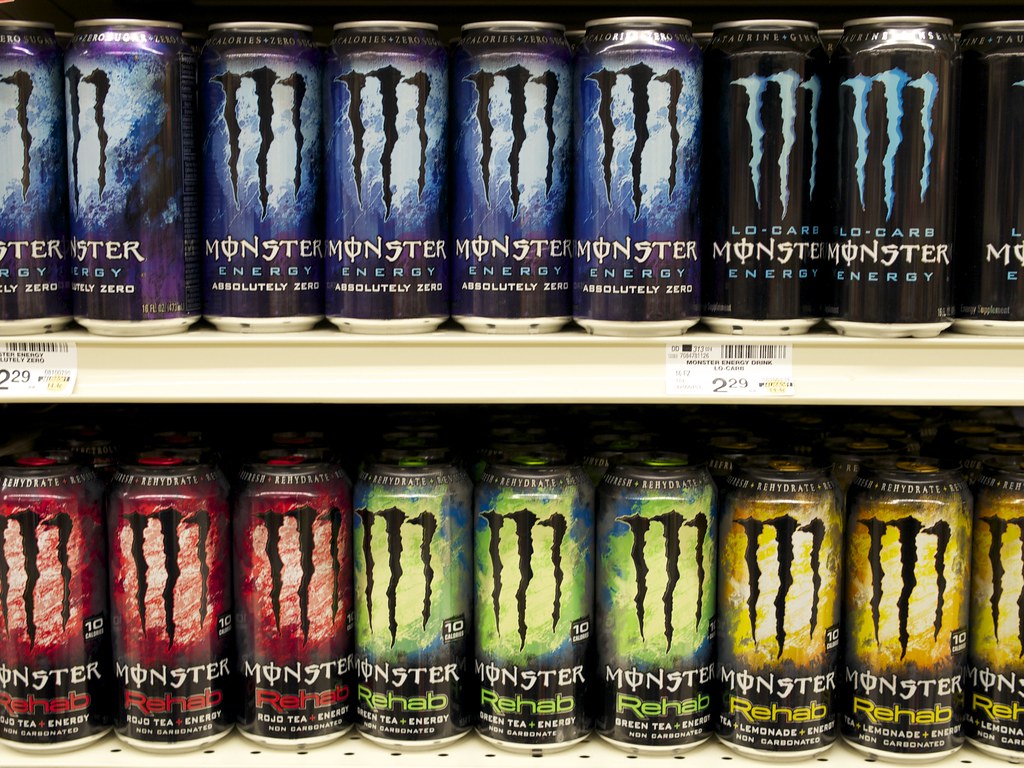
Monster drinksAustin Kirk / CC/SAJuly has been a bad month for those leading the foolhardy charge against energy drinks.
RELATED ARTICLES MORE ARTICLES BY Baylen Linnekin
Earlier this month saw the quiet but welcome dismissal of a set of lawsuits against Monster, the maker of popular energy drinks. The suits, filed earlier this year by Morgan & Morgan, a Florida-based law firm, claimed just two cans of Monster could be deadly.
"When the Monster lawsuit started earlier in 2016, the law firm Morgan & Morgan claimed two 16-ounce cans of Monster Energy contained a 'lethal dose' of caffeine and that 'overconsumption of energy drinks has led to heart attacks, strokes and even death,'" reported the news website Inquistr this week. "The Florida-based personal injury law firm has now asked the courts to dismiss their lawsuits."
The news is particularly noteworthy because the media loudly trumpeted the purported dangers of energy drinks in the wake of the lawsuits. A Daily Beast piece on the lawsuits, typical of the tone of some reports, described the lawsuits' target under an ominous (and false) heading: "death juice."
Most reports on the lawsuit's withdrawal, when they have appeared, have been of the demure, three-sentence variety. Ominous-sounding lawsuits make for good headlines. Dismissals no so much.
As part of its campaign against Monster, Morgan & Morgan had launched a website seeking potential plaintiffs to challenge the energy-drink maker.
"If you or someone you know has experienced heart problems, seizures, an irregular heartbeat, kidney failure, or any other adverse effects after drinking Monster Energy drinks," the firm's EnergyDrinksLawsuit.com website advertises, "you may be entitled to compensation."
Maybe not.
"The voluntary dismissal of these lawsuits, we believe, speaks volumes," Marc P. Miles of Shook, Hardy & Bacon, counsel for Monster Energy Company, said in a company press release. "We believe fairness dictates that the media now write about the dismissals."
In addition to the demise of the Morgan & Morgan litigation targeting energy drinks, fairness suggests the need to cite the rising tide of research demonstrating that energy drinks aren't the threat many critics claim. In an excellent Food Safety News piece on the dismissal of the lawsuits, Dan Flynn points to a recent peer-reviewed study by University of Texas-Austin researchers, which, in the words of the study authors, concluded that the impact of "consumption of a commercially available energy drink.... was similar to the effect of coffee and water consumption."
Nothing to see here. Move on.
But the news isn't all rosy for energy-drink makers and consumers. The lawsuit was just the latest threat against energy-drink makers. An effort by a Chicago city councilman to ban energy drinks failed several years ago, a story I detailed here. And the recent dismissal of the case against Monster doesn't spell the end of litigation over energy drinks, as other lawsuits are ongoing. Monster is still embroiled in at least one caffeine-related lawsuit with the city of San Francisco. A class-action lawsuit in California, while recently scaled back by a federal court, is still proceeding. A lawsuit involving Monster and the New York State attorney general is also pending.
These lawsuits take place against an ominous backdrop, as the FDA has spent several years quietly "investigating 'any and all products with added caffeine" since I first wrote those words in 2013. The good news? That investigation hasn't singled out energy-drink makers. The bad news? It's targeting all foods and beverages that contain added caffeine—from caffeinated gum and beef jerky to sodas and energy drinks.
The FDA's ongoing investigation raises the specter of the agency's campaign against Four Loko and similar caffeinated beers, which resulted in the agency banning the direct addition of caffeine to alcohol beverages in 2010.
Targeting energy drinks and energy-drink consumers has been a cottage industry. With any luck, the recent dismissal of lawsuits against Monster and the publication of new peer-reviewed research are harbingers that this is a cottage industry that is running out of energy.

Stomach pain, headaches and sleep problems - we reveal the hidden dangers of energy drinks - The Sun

What really is in these drinks? We give you the sugar, caffeine and calorie content of 250mls of seven favourites
ENERGY drinks packed with a caffeine and sugar can give you stomach pain, headaches and sleep problems, experts warn.
The fizzy pop favourites are also associated with binge drinking and drug use and researchers want to ban the sale of them to under-16s.
Brits are spending £1.1billion a year on 500million litres of energy drinks
Some 500ml cans contain almost 16 teaspoons of sugar – the recommended daily intake is seven – and 160mg of caffeine, when an average coffee has 71mg.
A 330ml can of Coca-Cola has 34mg caffeine, 139 calories and 35g of sugar.
But Brits are spending £1.1billion a year on 500million litrtes of these drinks and sales have soared more than 150 per cent since 2006.
Lens Lupari from County Antrim, Northern Ireland, was going blind after drinking 28 cans of Red Bull a day.
Public Health England recommends just 30g (seven teaspoons) of sugar a day For children and teenagers, these sugary drinks could cause obesity and tooth decay
And Martin Bowling of Little Wakering, Essex, almost died of a heart attack after swigging eight cans of Red Bull on a night out.
Sun Nutritionist Amanda Ursell says: “Public Health England recommends just 30g (seven teaspoons) of sugar a day.
“For children and teenagers, these sugary drinks could cause obesity and tooth decay. If a teenager is consuming a 500ml can of energy drink a day, they experience restlessness, difficulty concentrating and problems falling asleep.
“They could also have caffeine dependency, which could lead to other addictions such as alcohol abuse and using recreational drugs.”

Energy-Drink Habit Sends Man to ER with Heart Problems - Live Science

A previously healthy 28-year-old man wound up in the emergency room with heart problems after drinking two energy drinks a day, as well as alcohol, for months, according to a new report.
The man experienced a very fast heart rate and an irregular heart rhythm (called arrhythmia), and the report supports a connection found in many previous studies: that there is a link between energy-drink consumption and heart problems.
Although the new report cannot prove that the energy drinks caused the man's abnormal heart rate, this case, combined with other previous reports, shows the abnormal heart rhythm "could be a complication" of energy-drink consumption, the researchers, from the University of Florida, reported in the July/August issue of the Journal of Addiction Medicine.
Given the popularity of energy drinks, doctors should consider asking patients about their energy-drink consumption if they have an unexplained heart rhythm problem, the researchers said. [5 Health Problems Linked to Energy Drinks]
Previous studies have found that consuming just one energy drink can increase blood pressure, sometimes to unhealthy levels. And there have been several reports of young people who have suffered heart attacks after consuming energy drinks, including a 2015 report of a 26-year-old who drank eight to 10 of these highly caffeinated beverages a day.
In the new report, the researchers wrote that the man went to the hospital after he started vomiting blood. He told the doctors that he had consumed two Monster energy drinks that day, each of which contained 160 milligrams of caffeine, for a total of 320 mg of caffeine that day. (For comparison, an 8-ounce cup of coffee contains about 95 to 200 mg of caffeine, according to the Mayo Clinic.) He also reported having consumed two to three beers that day.
A physical exam showed normal results, except that the man's heart rate was very fast — 130 beats per minute. (A normal heart rate is usually between 60 and 100 beats per minute.) A test of his heart's electrical activity showed he had atrial fibrillation, or an abnormal heart rhythm. The problem is not usually life-threatening, but it can increase the risk of stroke and other heart complications, according to the Mayo Clinic.
The man was treated with two heart medications (diltiazem and metoprolol), and his heart rate returned to normal within 24 hours. He was released from the hospital three days later, and as of one year after the incident, he had not experienced any more problems with his heart rhythm, the report said.
Monster energy drinks contain about four to five times the amount of caffeine per serving as caffeinated soft drinks. Caffeine can cause heart cells to release calcium, which may affect heartbeat, and high amounts of caffeine can cause heart palpitations and vomiting, the researchers said.
Between 2004 and 2012, the Food and Drug Administration received 40 reports of people experiencing health problems after drinking Monster energy drinks, including abnormal heart rate, increased blood pressure, loss of consciousness and cardiac arrest, the report said.
Still, up to 400 mg of caffeine per day is considered safe for healthy adults, according to the Mayo Clinic.
It's possible that other ingredients in energy drinks, along with caffeine, contribute to the development of heart problems, the researchers said. For example, taurine, a common ingredient in energy drinks, may heighten the effects of caffeine, the researchers said. Another ingredient, called guarana, also usually contains caffeine and may boost the caffeine content of the whole beverage above what's listed on the label, they said.
Further studies of the ingredients in energy drinks are needed for experts to better understand how the beverages may be linked with heart problems, the researchers noted.
Consuming alcohol along with energy drinks might also increase the effects of caffeine, allowing the compound to stay in the blood longer, the researchers said. Caffeine also could lower the sedative effects of alcohol, allowing people to continue drinking longer and consume more alcohol, which, in turn, could increase intoxication and lead to arrhythmias, they said.
Although the long-term effects of energy-drink consumption are not known, "it may be reasonable to limit their use, especially in combination with alcohol or illicit substances and in patients predisposed to arrhythmias," the researchers concluded.
At the time of publication, Monster Energy had not responded to an email request from Live Science for comment on the study.
Original article on Live Science.

Mixing alcohol with energy drinks tricks us into craving even more booze - Daily Mail

  • Cocktails such as Jägerbombs are hugely popular among younger drinks
  • Mixing energy drinks and alcohol together may increase drinking levels
  • Caffeine hides the effects of alcohol and can lead to riskier behaviours
  • Bomb drinks can be as high as 5:1 in energy drink to alcohol ratio 
  • 32
    View comments
    Cocktails such as Jägerbombs – Red Bull mixed with Jägermeister liqueur - have become a huge craze among younger drinkers 
    Mixing energy drinks with alcohol leads to revellers wanting to consume even more booze, scientists claim.
    Cocktails such as Jägerbombs – Red Bull mixed with Jägermeister liqueur - have become a huge craze among younger drinkers.
    But mixing caffeinated drinks and alcohol together may lead to an increase in binge drinking.
    This is because the caffeine makes the drinker crave even more booze, researchers warned.
    Drinking vodka mixed with soft drinks - rather than caffeine - did not have the same effect, the study found.
    Previous research has warned caffeine masks the intoxicating effects of alcohol – and can lead to riskier behaviours as people don't realise how drunk they are.
    In the new study, researchers at Northern Kentucky University gave 26 adult social drinkers – 13 men and 13 women - one of six possible drinks over six sessions.
    These were:
    * Vodka mixed with a decaffeinated soft drink
    * Vodka and a medium energy drink,
    * Vodka and a large energy drink
    * A decaffeinated soft drink
    * A medium energy drink and a large energy drink.
    After each session the drinkers were asked to rate their desire for alcohol and breathalysed.
    Results showed drinking alcohol led to an increased desire for more booze – but drinking a mixer made participants crave it even more.
    The authors said the study provides evidence that mixing the two together leads to a greater desire for more booze - as opposed to drinking the same amount of alcohol on its own.
    They said their results 'are consistent with animal studies showing that caffeine increases the rewarding and reinforcing properties of alcohol'.
    Pre-mixed drinks have been banned in the US, but the authors write that ‘the popularity of combining energy drinks with alcohol has continued to increase'.
    Mixed drinks may contain 2:1 or 3:1 ratios of energy drink compared to alcohol. 
    But the authors warned the ratio in drinks such as Jägerbombs can be as high as 5:1.
    Previous research found caffeine masks the intoxicating effects of alcohol – and can lead to riskier behaviours as people often don't realise how drunk they are
    A Brazilian study in 2006 found the use of energy drinks might make people abuse alcohol when its effects are masked by caffeine.
    Professor Roseli Boergnen de Lacerda, who conducted the study, warned of a higher risk of car accidents due to drinking mixers 'because people who drank energy drinks with alcohol felt less intoxicated than they were'. 
    Jägermeister has become hugely popular in recent years – despite being closely associated with the Nazi Party after it was launched in 1934 – and later known in some circles as Goering-Schnapps. 
    The drink’s manufacturer, Curt Mast, was close friends with Hermann Goering, who as well as being head of the Luftwaffe and Hitler’s number two, was official huntmaster, or ‘Reichsjägermeister’, of the Nazi regime.  

    Mixing Energy Drinks With Alcohol Makes You Drink More: The Reason Why You Get So Wasted On Vodka And Red Bull - Medical Daily

    Red bull and vodka may be a staple at any college party or nightclub, but a recent study suggested that there may be a hidden danger in this popular party drink. According to a recent study, combining alcohol with high-caffeine energy drinks results in a greater desire to continue drinking alcohol, more so than if you were to drink alcohol alone or with a non-caffeinated beverage.
    For the study, now published online in the journal Alcoholism: Clinical and Experimental Research, scientists from the Research Society on Alcoholism studied the effects of energy drinks combined with alcohol (AmEDs) by asking 26 adult social drinkers (half male and half female) to drink alcohol and energy drinks both alone and in combination with one another.
    cocktailCaffeinated drinks may increase your desire to consume more alcohol. Pexels
    Over the course of six days, the volunteers received one of six possible beverages: vodka and a decaffeinated soft drink; vodka and a medium energy drink; vodka and a large energy drink; a decaffeinated soft drink; a medium energy drink; and a large energy drink. After each session, the participants rated their desire for alcohol, and their breath alcohol concentration was also measured.
    Results revealed an interesting trend: The participants’ desire to drink more alcohol was higher when they consumed alcohol along with a high-caffeine energy drink, compared to consuming the same amount of alcohol alone. According to the researchers, these results are consistent with animal studies which also showed that caffeine seemed to increase the desire to consume more alcohol. Although the reason for this is not entirely clear, the team believes it may be because caffeine has a way of increasing the rewarding properties of alcohol.
    This is not the first time the consumption of energy drinks has been associated with making poor decisions. In fact, Middlebury College, in Middlebury, Vt., went as far as to ban the sale of these beverages on campus due to their association with “problematic behavior," such as risky sex and alcohol abuse. This claim is not unwarranted: A study conducted at Dartmouth's Norris Cotton Cancer Center found that American teenagers between the ages of 15 and 17 who mix energy drinks and alcohol are four times more likely to develop an alcohol use disorder compared to teens who have never experimented with this combination.
    Although it's not entirely clear why energy drinks tend to increase drinkers’ risk-taking behavior, the U.S. Food and Drug Administration banned the sale of  pre-mixed energy drinks combined with alcohol (AmEDs), such as Four Loco, as an attempt to restrict this beverages’ consumption.
    Energy drinks have been under criticism for many years now, and research has found they come with certain health risks in addition to increasing risky behavior. For example, a study released earlier this year at a meeting of the American Heart Association in Phoenix concluded that consuming high volumes of energy drinks may increase the risk of having an abnormal heart rhythm and high blood pressure.
    For the study, a team of researchers examined the heart rhythm and blood pressure of 27 healthy adults before and after they had consumed energy drinks. Those given the energy drinks experienced worrying changes in heart rhythm and blood pressure, while they found no changes in measurements for the group given a placebo.
    Source: Marczinsk, CA, Fillmore MT, Stamates AL, Maloney SF. Desire to Drink Alcohol is Enhanced with High Caffeine Energy Drink Mixers. Alcoholism: Clinical & Experimental Research. 2016.